We help partners connect material attributes with manufacturability, stability, and product performance, so development decisions can be made earlier and with greater confidence. Our Material Science Laboratory provides a in-depth characterization across solid and liquid states, bridging the gap between raw molecular properties and final product performance. We transform raw data into actionable insights through a “Material-First” philosophy.
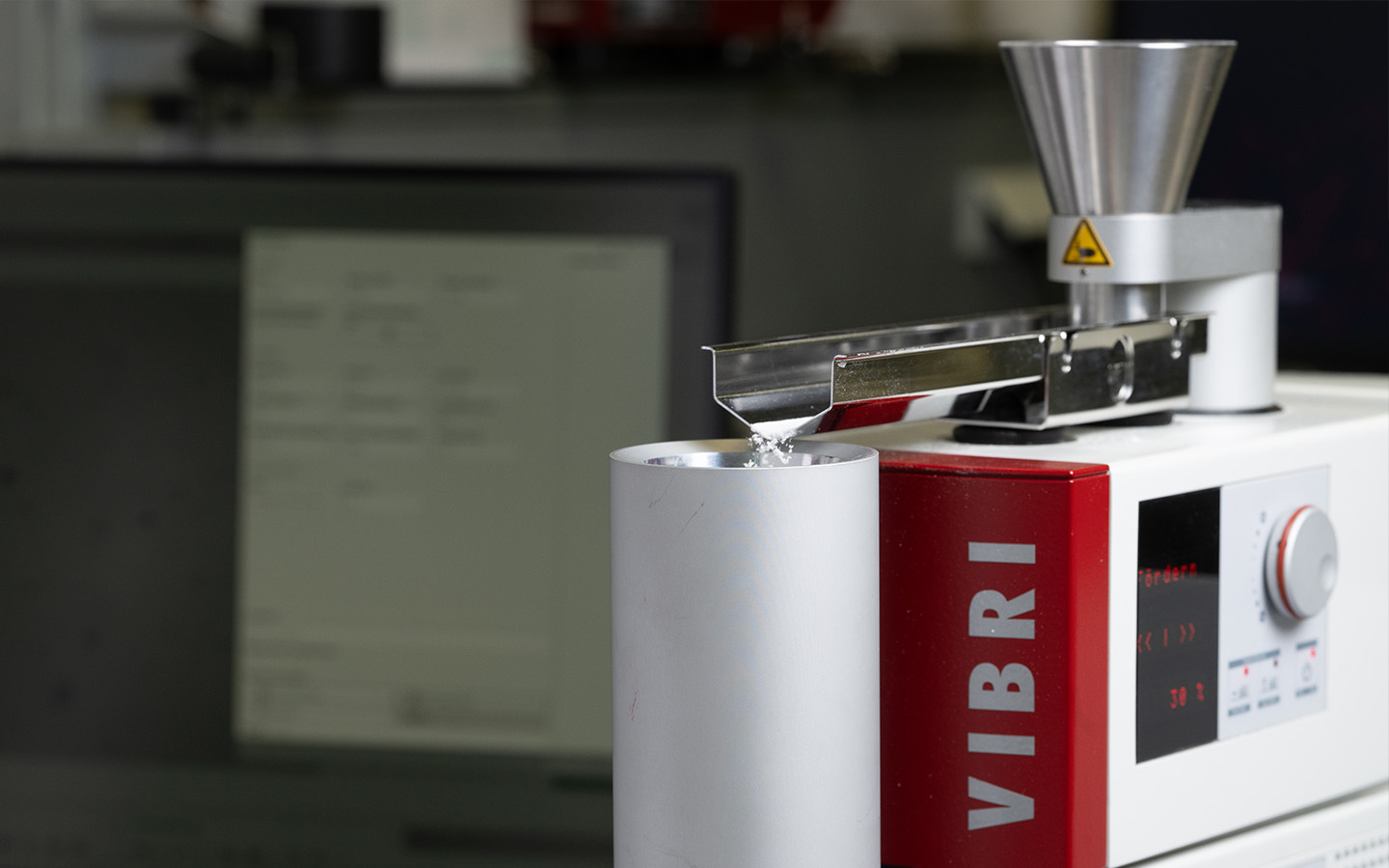
High-resolution particle size distribution from 0.45 to 875 µm by dry-dispersed laser diffraction (HELOS/KR), compliant with ISO 13320:2020, to support robust formulation and process design.
Particle size and shape factor distribution from 2 to 4000 µm by dry-dispersed dynamic image analysis (QICPIC/L), aligned with ISO 13322-2:2021, to de-risk flow, blend, and dissolution behavior.
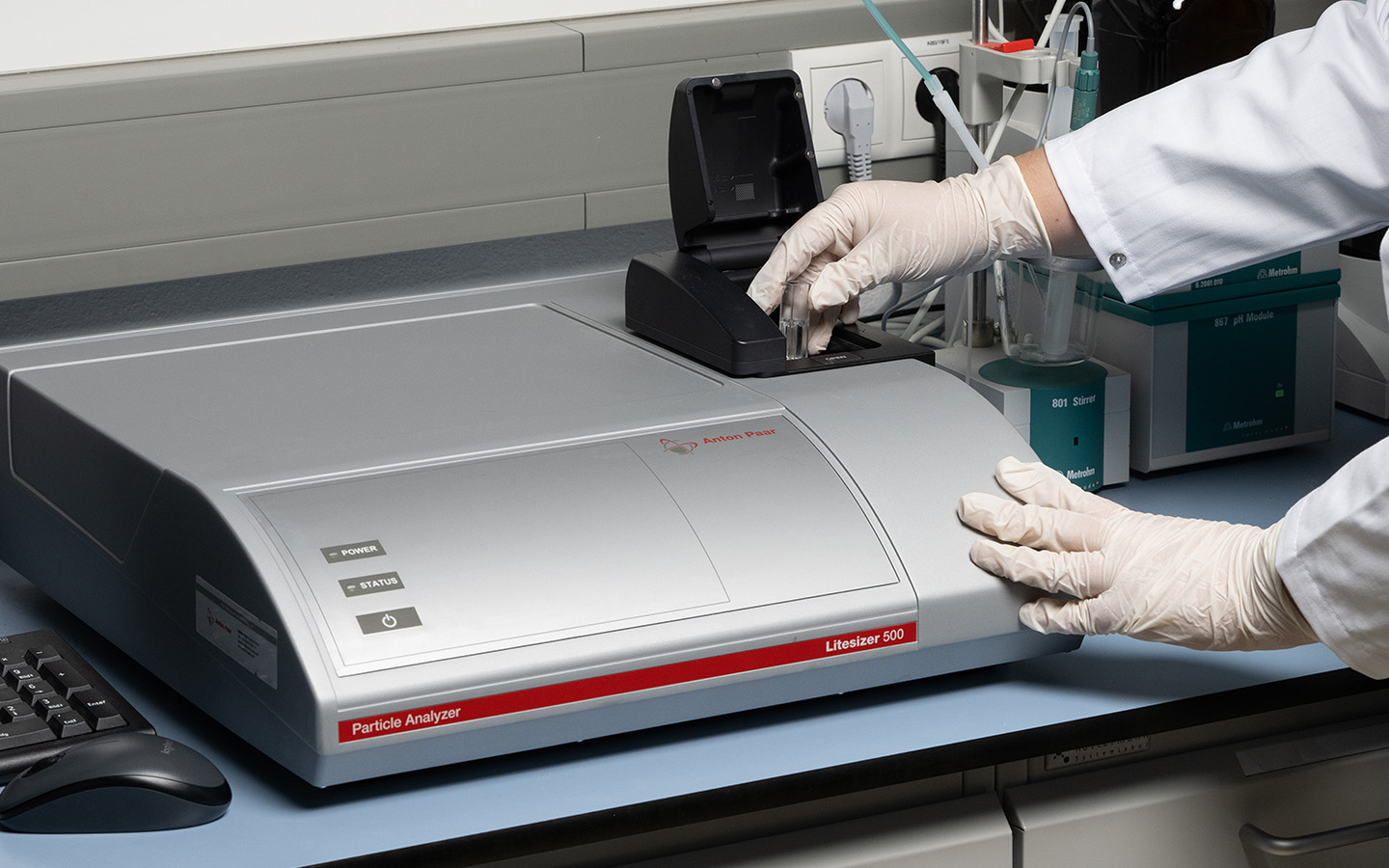
Particle size distribution from 0.3 nm to 10 µm, aligned with ISO 22412:2017 as well as Zeta Potential determination, to characterize nanoparticles and macromolecules in suspension and optimize the performance of nano-scale materials.
Mass-based particle size distribution from 25 µm to 4 mm using ISO 3310‑1–compliant sieves, enabling robust classification, specification setting, and quality control for powders and granules.
Bulk/tapped density analysis with Pharmatest PT-TD 200, compliant with USP <616> methods 1 and 2, EP <2.9.34> and DIN 53194, to optimize fill performance and dosage form uniformity.
Advanced powder flow characterization with the FT4 Powder Rheometer, including automated shear cell tests per ASTM D7891, to predict handling, feeding, and scale-up performance.
High-precision true density determination with Accupyc II 1340, compliant with ISO 12154 and USP <699>, enabling accurate porosity and solid-state assessments.
Multipoint nitrogen adsorption according to ISO 9277 to determine BET or Langmuir surface area, supporting dissolution, stability, and performance optimization.
Rapid moisture content assessment from 40 to 230 °C with the HC103 moisture analyzer, enabling tight control of drying processes and solid-state stability.
Sensitive coulometric water content analysis with KF7500trace, providing precise low-level moisture data for hygroscopic and critical materials, according to USP <921>.
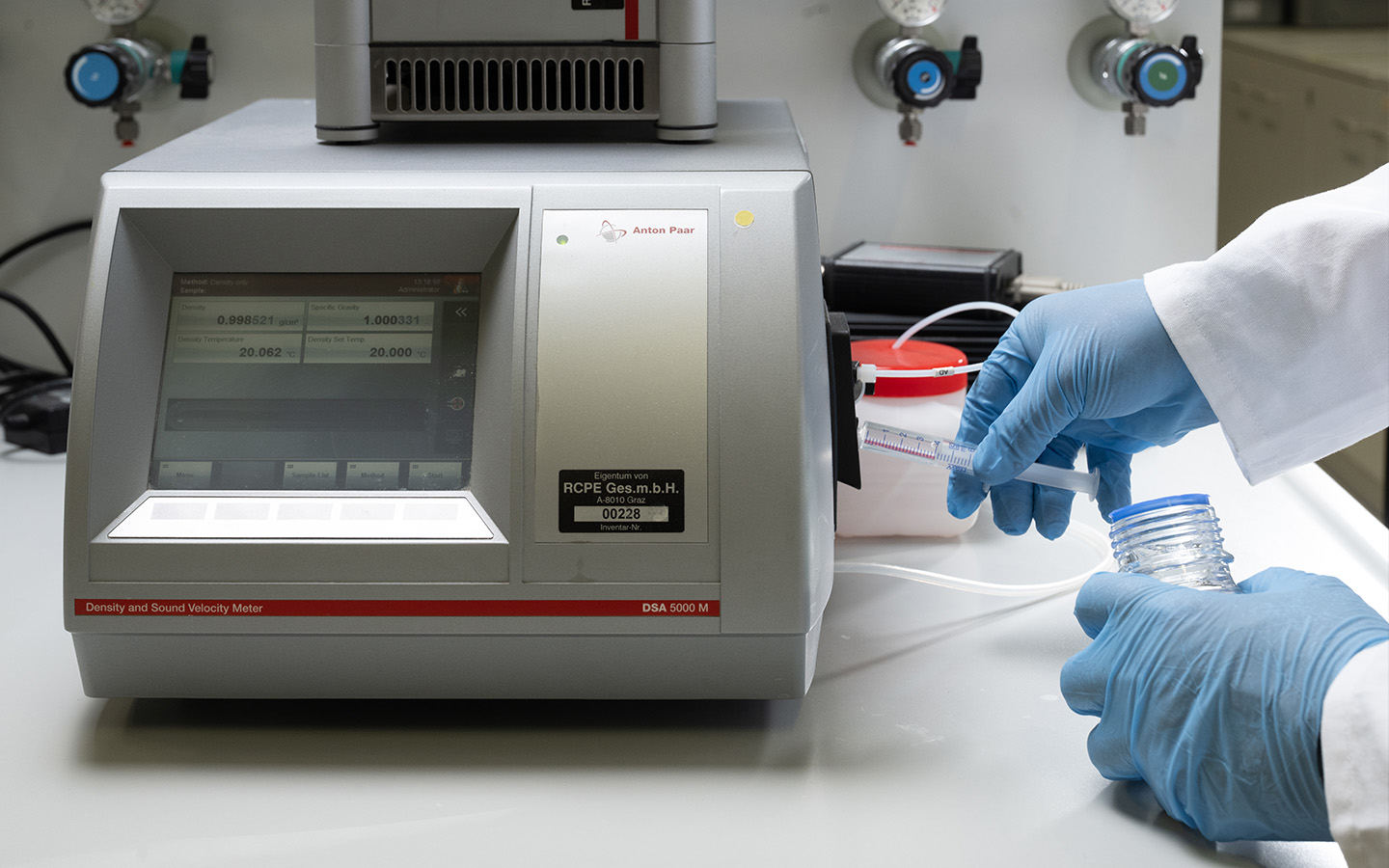
Accurate liquid density determination from 20 to 70 °C by oscillation measurement with DSA 5000M, supporting formulation design and process engineering.
Gravimetric vapor uptake and kinetics with the Dual Vapor Gravimetric Sorption Analyzer, characterizing hygroscopicity and guiding packaging and stability strategies.
Viscosity and flow behavior of liquids, gels, and pastes using plate–plate or cone–plate geometries on the MCR302, from 20 to 200 °C and varying shear rates, to tune processability and performance.
Differential scanning calorimetry with NETZSCH 204 Phoenix for melting point, melt/crystallization enthalpy, and polymorph characterization, de-risking solid-state transitions and stability.
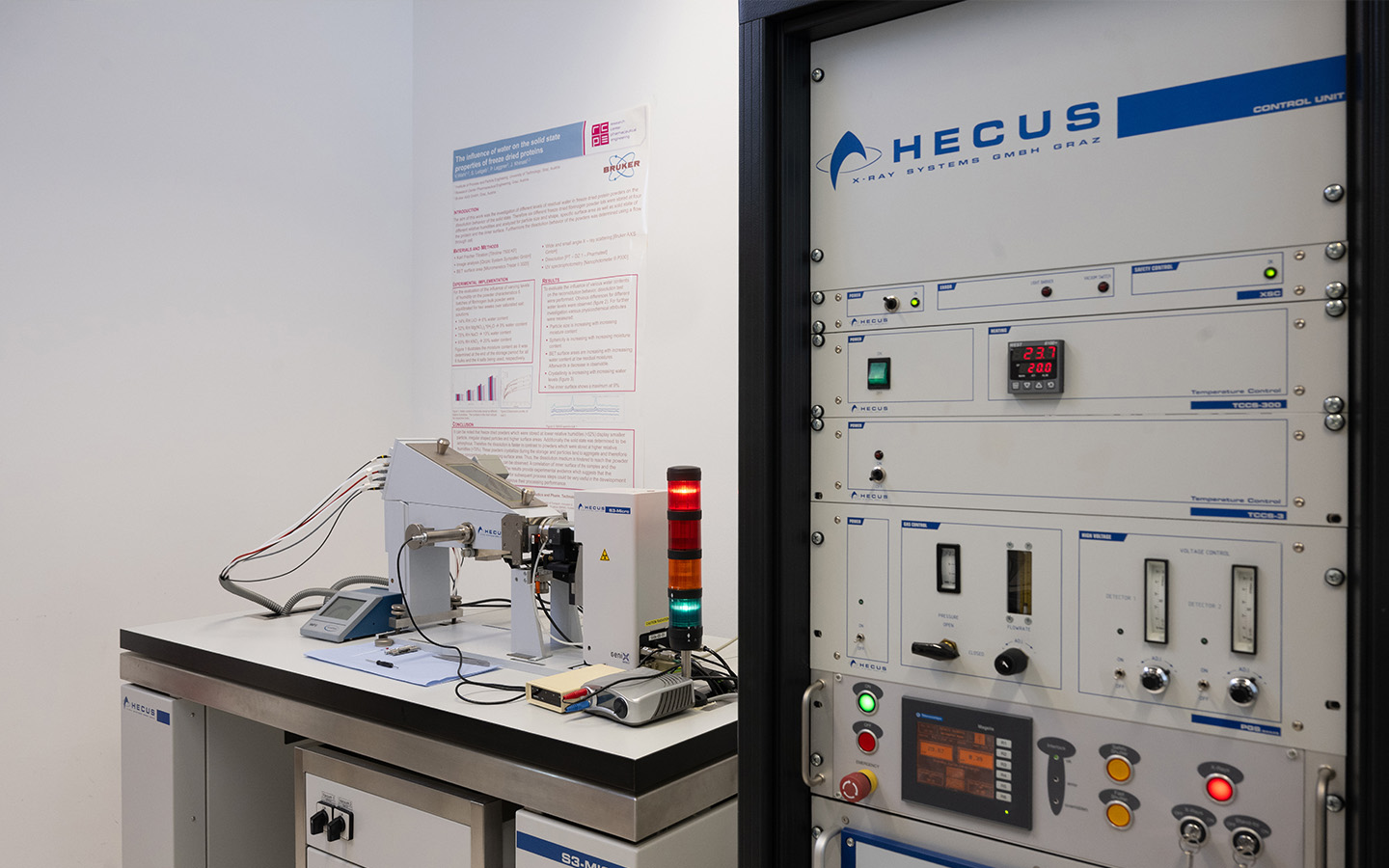
Nano- to micro-structure analysis with SAXS S3 Micro Hecus, equipped with point collimation, Kratky camera, and position-sensitive detectors, to elucidate morphology, aggregation, and structural order.